Books that keep themselves
Every sale, return, expense and purchase is posted to your accounts the moment it happens. Your accountant gets real books; you get today's profit today.
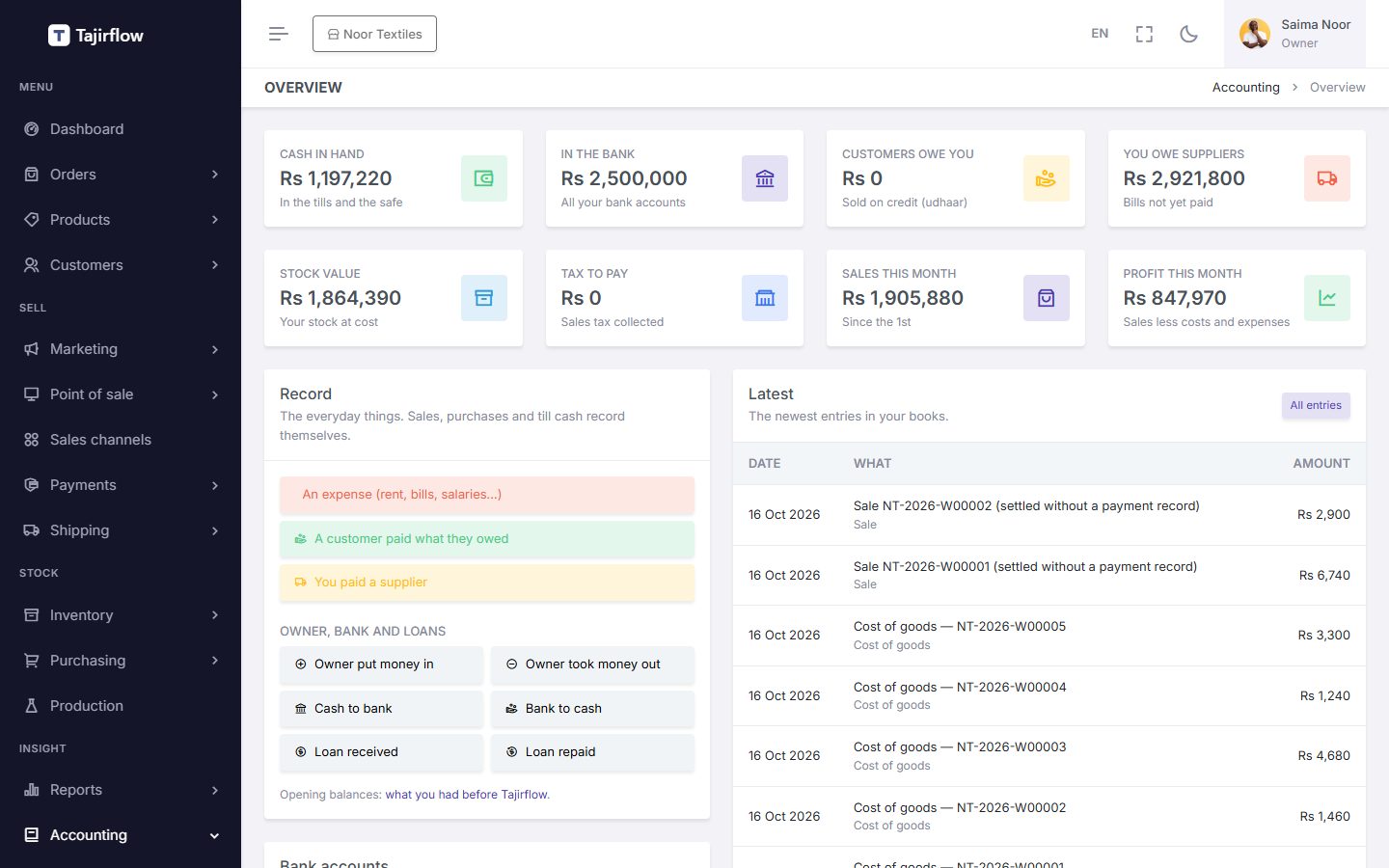
Posted by itself, double-entry
The receipt on our home page, as your books record it: the JazzCash account, sales, GST and the cost of what was sold — balanced, with nobody typing it.
- Sales, returns, discounts and gift cards
- Purchases, supplier bills and payments
- Stock value and cost of goods, from what the stock really cost
Udhaar, like your khata — but always right
A sale on credit goes on the customer's account and comes off when they pay — at any till, online or by JazzCash.
- Who owes what, and for how long
- What you owe each supplier, and when it is due
Banks, cash and the owner's money
- Several bank accounts and wallets, each with its own balance
- Owner's money in and out, loans, other income and things bought for the business
- Opening balances when you start, and old records brought in from a spreadsheet
- Staff advances, recovered against salary
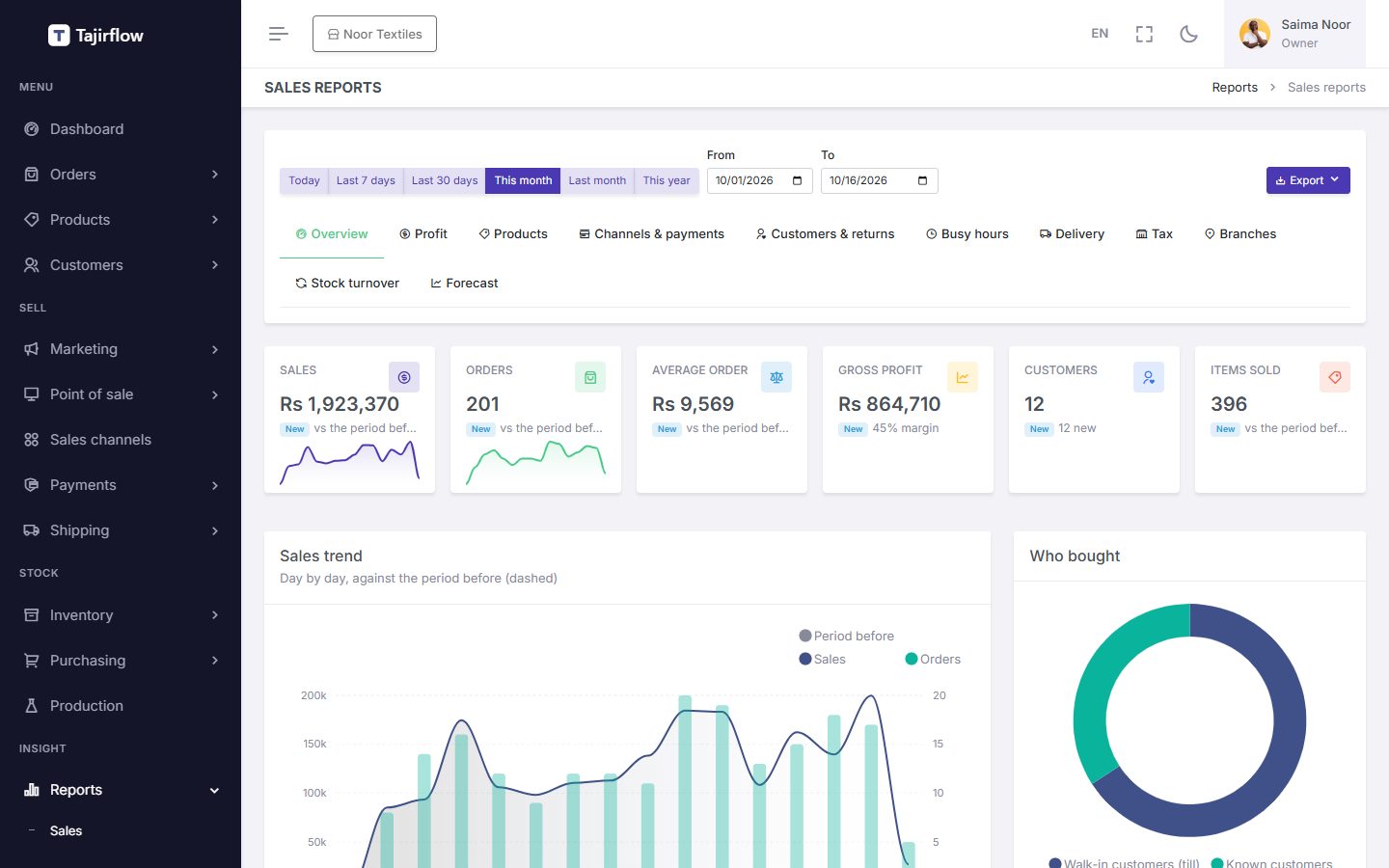
A day at the till, in the books
The cash drawer is an account too — so the cash in hand in your books is the cash in the drawer.
Open the till
The cashier counts the opening cash; the drawer is on record from the first sale.
Sell all day
Each sale, return and payment method goes to the right account as it happens.
Pay small expenses from the drawer
Tea, petrol, a staff advance — each with a reason, out of the right drawer.
Close the till
Counted cash against what it should be; a short or extra amount is recorded, not hidden.
Read the day
Sales, cash in hand, what customers owe and today's profit — branch by branch.
The reports your accountant asks for
Every one for any dates and any branch, to Excel or PDF.
Profit and loss
What you earned, what it cost, and what is left.
Balance sheet
What the business owns and owes, today.
Cash flow
Where the money came from and where it went.
Trial balance
Every account, for the year-end and the tax return.
Customer and supplier ageing
Who has owed for 30, 60, 90 days.
Books check
Sales, stock and money matched against the books.